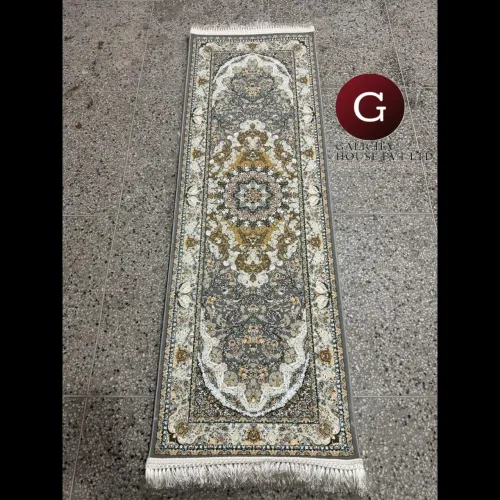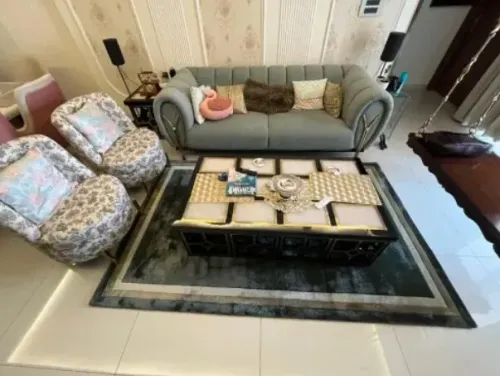
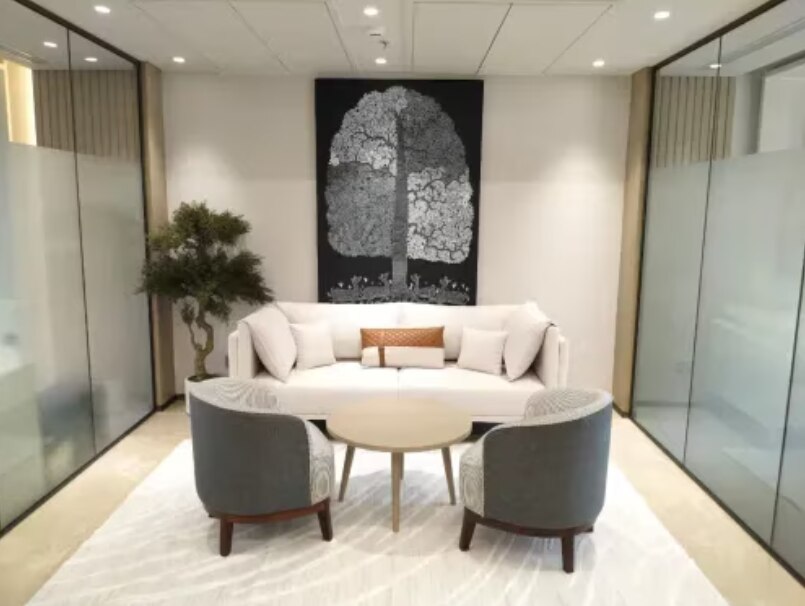
Architects need to specify carpet by use, loading and maintenance conditions rather than by room name alone. This guide shows how to match carpet construction, format, performance data, installation details and maintenance planning to Delhi residential, commercial and hospitality projects.
Key takeaways
- Classify rooms by pedestrian traffic, concentrated loading and failure consequences.
- Match construction data to traffic, castor use, moisture and replacement needs.
- Use carpet tiles for targeted replacement; choose broadloom for seamless large areas.
- Coordinate acclimatisation, subfloor checks and installation with Delhi’s building programme.
Classify Each Room by Traffic, Loading and Risk
Classify each room on three axes before selecting carpet: pedestrian traffic, concentrated loading and the consequence of failure. A quiet bedroom and a hotel corridor may share a colour palette, but they need different construction and replacement plans.
| Room type | Traffic and loading | Main risk to record |
|---|---|---|
| Bedroom or private living room | Low to moderate walking; furniture legs | Crushing, staining and visible shading |
| Meeting room or executive office | Moderate walking; castor chairs and table legs | Tracking, pile distortion and chair wear |
| Open-plan workspace | High daily traffic; continuous castor-chair movement | Wear lanes, soil, seam failure and downtime |
| Hotel room or lounge | Moderate traffic; luggage, beds and movable furniture | Stains, cleaning frequency and replacement access |
| Corridor, reception or entrance | Very high traffic; turning loads and rolling carts | Abrasion, tracked dust, monsoon moisture and safety |
Do not classify by footfall alone. EN 985 castor-chair testing matters in offices because carpet that survives walking can still deform under chair wheels. Entrance areas need a dirt-control matting zone before decorative carpet begins.
Record daylight exposure, fixed or movable furniture, cleaning frequency and the time allowed for replacement. These details separate residential room carpet from commercial and hotel carpet, where downtime and access to replacement stock carry greater cost.
A carpet shop in Delhi handling room carpet applications should provide a room-by-room schedule, not one product recommendation. Request a large sample, technical data sheet, EN 13501-1 fire classification for the tested backing and installation, cleaning method, acoustic data, warranty exclusions and installation system.
Compare the Construction and Performance Data
A room carpet for architects in Delhi should be compared as a tested floor system, not as a colour sample. Request a large sample, technical data sheet, warranty exclusions, cleaning method and installation details; a small swatch cannot show pattern repeat, directional shading, seam visibility or the effect of daylight and artificial light.
| Specification | Compare | Why it matters |
|---|---|---|
| Fibre and pile | Wool, nylon or polypropylene; loop, cut or cut-and-loop pile | Determines resilience, texture, stain response and replacement suitability |
| Construction | Tufted or woven; pile height and density | Low density and excessive height can flatten, track or retain soil |
| Rolling load | EN 985 castor-chair result and declared rolling-load limits | Walking performance does not predict office-chair distortion |
| Backing and underlay | Primary and secondary backing, adhesive, cushion and substrate requirements | Changes dimensional stability, comfort, seam behaviour and fire-test applicability |
| Fire performance | EN 13501-1 classification such as Bfl-s1 or Cfl-s1 | The rating belongs to the tested carpet, backing, adhesive and installation assembly |
| Acoustics | ISO 354 absorption data; ISO 10140 insulation data where relevant | Absorption can reduce reverberation, but it does not prove speech blocking |
| Colour and cleaning | Colourfastness, stain resistance, approved chemicals and cleaning frequency | Poor compatibility causes fading, permanent marks or shortened service life |
For entrances, specify a cleanable dirt-control mat long enough for multiple foot contacts. Delhi dust and monsoon moisture will quickly soil decorative carpet placed directly at the threshold.
Compare installed-life cost: material, waste, labour, maintenance, replacement stock and downtime. Carpet tiles can isolate damage; broadloom can deliver fewer joints but makes local replacement harder.
Choose Broadloom, Carpet Tile, Area Rug or Hard Flooring
Broadloom suits bedrooms, living rooms, hotel rooms, meeting rooms and executive offices where a continuous surface improves comfort, acoustics and visual calm. Carpet tile suits open-plan workspaces, corridors, reception areas and heavily used lounges because you can replace damaged modules without removing the entire floor.
| Option | Best room applications | Choose it when | Specify another covering when |
|---|---|---|---|
| Broadloom | Bedrooms, living rooms, hotel rooms, executive offices, meeting rooms | You want few seams, stronger pattern continuity and wall-to-wall acoustic coverage | Access, replacement or frequent reconfiguration matters more than visual continuity |
| Carpet tile | Open-plan offices, corridors, reception areas, lounges | Rolling loads, local replacement and phased installation drive the decision | Seams or directional shading would undermine a formal room |
| Area rug | Living rooms, executive offices, hotel seating areas, lounges | You need zoning, warmth or a removable design layer over a sound hard floor | The whole floor needs slip control, acoustic coverage or uniform wear |
| Hard flooring | Pantry areas, washrooms, entrances, service zones and spill-prone rooms | Water, grit, cleaning chemicals or frequent wet cleaning dominate | Comfort, quietness and underfoot warmth are primary requirements |
Treat room carpet applications by loading, not the room label. A bedroom can use a lower EN ISO 10874 class, while a corridor may need Class 33 or 34. For offices, check EN 985 castor-chair performance; walking-grade carpet can fail under chair tracking.
Specify hard flooring at wet entrances and pantry thresholds, or combine it with carpet beyond the contamination zone. Confirm the EN 13501-1 classification, such as Bfl-s1 or Cfl-s1, for the complete tested assembly, including backing, adhesive and underlay.
Coordinate Delhi Installation with the Building Programme
Release room carpet only after the building is enclosed, wet trades are complete, and the floor can stay within the manufacturer’s temperature and humidity range. A visually dry slab can still destroy adhesive or create odour, bubbling and seam failure.
1. Record concrete moisture before ordering installation. Use ASTM F2170 for in-situ relative humidity and ASTM F1869 for moisture-vapour emission, then compare the results with the adhesive and carpet-tile manufacturer’s stated limits.
2. Confirm the substrate is flat, clean, sound and free of curing compounds, dust, oil and loose levelling compound. Repair cracks, fill depressions and allow primers or screeds to cure for the specified period.
3. Fix the tested fire assembly in the specification. Ask for the EN 13501-1 classification, such as Bfl-s1 or Cfl-s1, for the proposed carpet construction with its backing, adhesive and underlay; a generic “fire resistant” claim is not enough.
4. Draw corridors and circulation routes before ordering. Mark pattern repeat, pile direction, seam positions, door swings, thresholds, floor boxes, access panels and the direction of chair movement.
5. Programme delivery after painting, joinery and heavy vehicle traffic, but before final snagging. Store rolls or tiles flat, dry and protected from sunlight, and follow the supplier’s acclimatisation instructions.
6. Put a cleanable entrance matting zone before decorative carpet begins. Specify enough length for multiple foot contacts, with absorbent matting at thresholds exposed to Delhi dust and monsoon moisture.
Specify room carpet for architects in Delhi against these site facts, not a sample alone. Carpet tiles ease later local replacement; broadloom reduces visible joints but increases cutting waste and complicates repairs.
Write the Maintenance and Supplier Comparison into the Specification
Compare suppliers on installed-life cost, not the roll price. Include carpet, underlay or adhesive, cutting waste, labour, cleaning frequency, replacement stock and room downtime. A cheaper broadloom can cost more after seam failure or traffic-lane wear forces replacement of a whole area.
| Measure | Ask for | Why it protects value |
|---|---|---|
| Installed cost | Itemised supply, waste, installation and removal costs | Reveals whether carpet tiles allow cheaper local repairs than broadloom |
| Fire performance | EN 13501-1 classification such as Bfl-s1 or Cfl-s1 for the complete tested assembly | Prevents a generic “fire resistant” claim from being applied to a different backing, adhesive or underlay |
| Load performance | EN 985 castor-chair result and rolling-load limits | Exposes pile tracking and distortion in offices that walking-traffic data misses |
| Maintenance | Approved cleaning chemistry, equipment, frequency and stain-treatment limits | Prevents colour loss, backing damage and invalidated warranties |
| Handover | Batch details, spare material, seam plan, warranty exclusions and replacement procedure | Gives facilities staff a repair route after the installer leaves |
Specify a dirt-control zone before decorative carpet at every entrance. Use a cleanable, absorbent mat long enough for multiple foot contacts; Delhi dust and monsoon moisture otherwise shorten carpet life.
Demand large samples, not a small colour swatch. Check pattern repeat, shading, seam visibility and colour under daylight and artificial light. Ask a commercial room carpet supplier in delhi to demonstrate the proposed fibre and printed surface under the stated cleaning method.
For a room carpet shop in delhi comparison, ask GALICHA HOUSE PVT LTD 8384046294 to quote against the same schedule, including maintenance and replacement stock. That makes price differences comparable rather than persuasive.
Related products
 | Room Carpet Room Carpet Room Carpets by Galicha House Pvt. Ltd. Enhance the comfort and style of every room in your home or office with Room Carpets from Galicha House Pvt. |
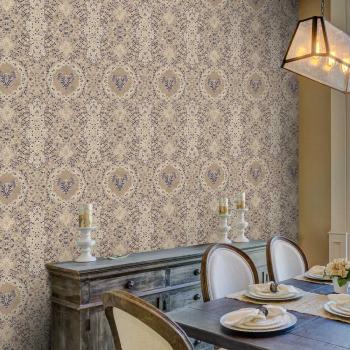 | Wall Carpet Wall Carpet Wall Carpets by Galicha House Pvt. Ltd. Enhance the elegance and style of your interiors with luxurious Wall Carpets from Galicha House Pvt. |
Frequently asked questions
How should architects classify rooms before selecting carpet?
Classify each room by pedestrian traffic, concentrated loading and the consequence of carpet failure. A bedroom, hotel corridor and office reception require different performance and replacement plans.
Which carpet construction data should architects compare?
Compare fibre type, pile construction, pile density, backing, wear rating, dimensional stability, acoustic performance, castor-chair suitability and cleaning requirements.
When should you choose broadloom, carpet tile, an area rug or hard flooring?
Choose broadloom for a continuous finish across large areas, carpet tile where damaged sections need replacement, area rugs for flexible decorative zoning, and hard flooring where moisture or heavy loading makes carpet unsuitable.
What should a Delhi carpet installation plan include?
Allow time for subfloor inspection, moisture checks, delivery, acclimatisation, cutting, seaming, adhesive curing and coordination with electrical, joinery and furniture work.
Related products
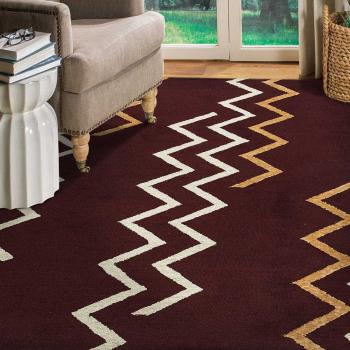 | Carpet Flooring Carpet Flooring by Galicha House Pvt. Ltd. Upgrade your interiors with luxurious and durable Carpet Flooring from Galicha House Pvt. |
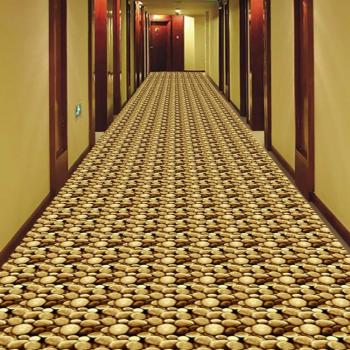 | Hotel Carpet Hotel Carpet Hotel Carpets by Galicha House Pvt. Ltd. Enhance the elegance, comfort, and sophistication of your hospitality spaces with premium Hotel Carpets from... |
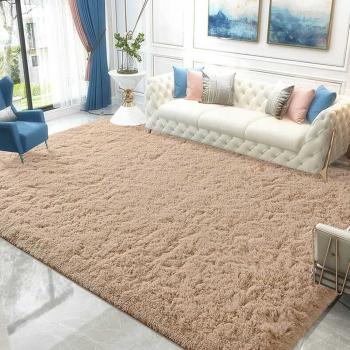 | Living Room Carpet Living Room Carpet Living Room Carpets by Galicha House Pvt. Ltd. Enhance the heart of your home with luxurious Living Room Carpets from Galicha House Pvt. |
 | Bedroom Carpet Bedroom Carpet Bedroom Carpets by Galicha House Pvt. Ltd. Transform your bedroom into a haven of comfort and luxury with Bedroom Carpets from Galicha House Pvt. |
Keywords